Claim denials are a common challenge in medical billing, but some denial codes can be especially frustrating because they don’t immediately explain what went wrong.
Denial Code 26 is one of those examples. Many billing teams see it on a remittance advice and are left wondering why a claim was denied and what steps are needed to resolve it.
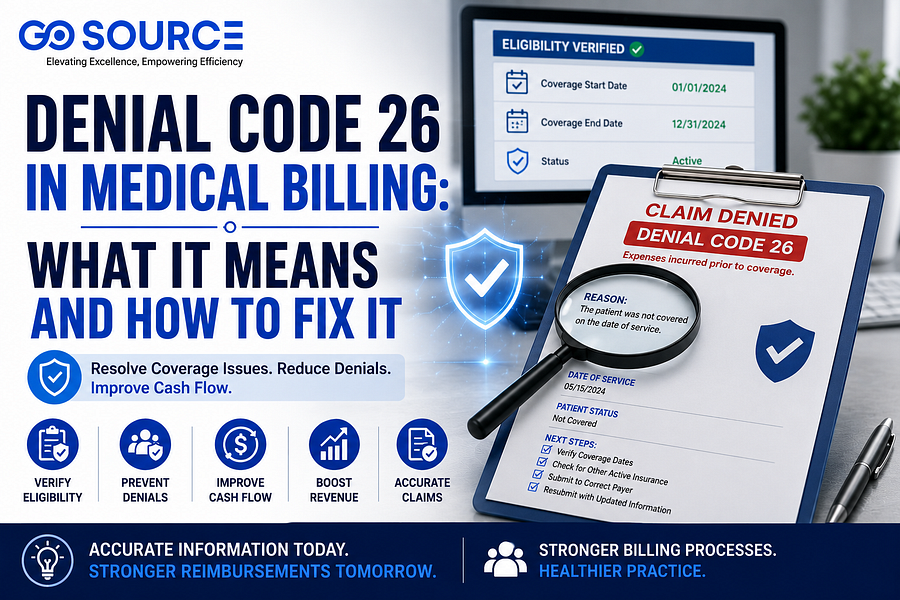
In simple terms, Denial Code 26 means the insurance payer believes the patient was not covered on the date the service was provided. While the care was delivered and the claim was submitted correctly, the payer’s records indicate that the patient’s insurance coverage was either not yet active, had already ended, or was not valid on that specific date of service.
These denials can create unnecessary delays, increase administrative workload, and impact cash flow if they are not addressed quickly. Understanding why they occur is the first step toward preventing them.
In this guide, we’ll explain what Denial Code 26 means, the most common reasons it happens, and how your practice can reduce these denials through stronger eligibility verification and insurance validation processes.
See how billing denials are hitting speciality practices across healthcare — Read More here.
What Does Denial Code 26 Mean?
Denial Code 26 is a Claim Adjustment Reason Code (CARC) used by Medicare, Medicaid, and commercial insurance payers.
The official description is:
“Expenses incurred prior to coverage.”
This means the insurance company believes the patient was not covered under the plan on the date the services were provided.
In most cases, the denial falls into one of three categories:
Coverage Had Not Yet Started
The patient may have recently enrolled in a new insurance plan, but the effective date of coverage began after the date of service. This is commonly seen with employer-sponsored insurance changes, marketplace health plans, or newly approved Medicaid coverage.
Coverage Had Already Ended
The patient’s insurance may have terminated before the date of service due to a job change, loss of benefits, cancelled coverage, or an expired plan. If the provider were unaware of the change, the claim may be submitted to an insurance policy that was no longer active.
Coverage Information Does Not Match Payer Records
Sometimes eligibility checks appear to show active coverage, but the payer’s claims system contains different effective dates. Delays in enrolment updates, system discrepancies, or incorrect insurance information can result in a denial even when the patient appeared eligible at the time of service.
Understanding which of these scenarios applies is critical because the next steps for correcting and resubmitting the claim will depend on the underlying cause of the denial.
Which Specialities and Billing Scenarios Are Most Affected?
While Denial Code 26 can occur in any healthcare setting, certain specialities and billing situations are more likely to experience these coverage-related denials.
Obstetrics and Prenatal Care
OB/GYN practices often see Denial Code 26 because maternity care spans several months, and insurance changes can occur at any point during a pregnancy. Patients may switch employers, change health plans, or become eligible for different coverage during their prenatal care journey. If coverage dates are not updated correctly, claims may be submitted to the wrong payer, resulting in denials.
Long-Term Treatment Plans
Specialities that provide ongoing care over an extended period are also at higher risk. This includes:
- Physical Therapy
- Behavioral Health
- Oncology
- Chronic Disease Management
- When treatment continues across multiple visits or months, there is a greater chance that a patient’s insurance coverage may change, lapse, or terminate without the practice being notified immediately.
New Year Insurance Changes
The beginning of the year is one of the busiest periods for Denial Code 26. Many patients receive new insurance plans through employers, marketplace exchanges, or government programs starting January 1.
If billing teams continue submitting claims to a patient’s previous insurance carrier after a coverage change, those claims are likely to be denied because the policy is no longer active for the date of service.
Medicaid Patients
Practices that serve Medicaid populations frequently encounter coverage-related denials due to changes in eligibility status. Medicaid enrollment can change based on income, household circumstances, or periodic eligibility reviews.
Because coverage status may change throughout the year, verifying eligibility before each visit is especially important for reducing Denial Code 26 denials and preventing unnecessary claim rework.
Understanding which patient groups are most vulnerable to coverage changes can help practices focus their eligibility verification efforts and reduce avoidable denials before claims are submitted.
How to Fix a Denial Code 26 Claim?
Resolving a Denial Code 26 starts with identifying why the payer believes coverage was not active on the date of service. Once the cause is confirmed, the claim can usually be corrected and resubmitted through the appropriate channel.
Step 1: Verify Coverage Dates
Begin by confirming the patient’s insurance coverage directly with the payer or through the payer’s provider portal. Review the policy’s effective date, termination date (if applicable), and determine whether coverage was active on the date the service was provided.
Step 2: Check for Other Active Insurance
Sometimes the denied policy was not active, but the patient had coverage through another plan. Contact the patient and verify whether they had:
- A new employer-sponsored plan
- Coverage through a spouse or family member
- Medicaid or Medicare coverage
- A marketplace health plan
- Obtaining the correct insurance information is often the fastest way to resolve the denial.
Step 3: Submit the Claim to the Correct Payer
If another insurance plan was active on the date of service, update the patient’s insurance information and submit the claim to the correct payer. If filing deadlines are approaching, include documentation of the original denial to help support timely filing requirements.
Step 4: Appeal the Denial if Coverage Was Active
If your records show the patient was eligible on the date of service, the denial may be the result of an enrolment or eligibility error. In this situation, submit an appeal with supporting documentation.
Your appeal should include:
- A copy of the original claim
- Eligibility verification records showing active coverage
- Documentation from the payer portal, if available
- A written explanation outlining the discrepancy
- A request for claim reprocessing
- Strong eligibility documentation can often help overturn incorrect Denial Code 26 determinations.
Step 5: Bill the Patient if No Coverage Existed
If all verification efforts confirm that no active insurance coverage was in place on the date of service, the balance becomes the patient’s responsibility. Send a patient statement promptly, clearly explaining the reason for the balance, and consider offering payment arrangements when appropriate.
Addressing Denial Code 26 quickly helps minimize payment delays and reduces the amount of time claims spend in accounts receivable.
How to Prevent Denial Code 26 from Happening Again?
Resolving individual Denial Code 26 claims is important, but preventing them in the first place can save your practice significant time and revenue.
Verify Eligibility on the Day of Service
One of the most effective ways to prevent Denial Code 26 is to verify insurance coverage on the actual date of service. Insurance status can change overnight, and a patient who appeared covered during scheduling may no longer have active coverage when they arrive for their appointment.
For practices that perform batch eligibility checks before appointments, adding a quick real-time verification at registration can help catch same-day coverage changes before a claim is submitted.
Pay Extra Attention to High-Risk Patients
Certain situations carry a higher risk of coverage changes and deserve additional verification. These include:
- Patients with appointments in January and February
- Individuals who recently changed jobs
- Patients who have reported insurance changes
- Medicaid beneficiaries undergoing eligibility reviews
- Patients with employer-sponsored coverage that may be affected by employment status changes
Taking a few extra minutes to confirm coverage in these cases can prevent costly denials later.
Monitor Denial Trends by Payer
Review Denial Code 26 activity regularly and look for patterns. If the same payer generates an unusually high number of these denials, there may be an issue with eligibility data, enrolment records, or payer system updates.
Tracking denial trends can help identify recurring problems and provide valuable information when working with payer representatives to resolve them.
Confirm Insurance Information at Every Visit
Many practices verify insurance only during a patient’s first visit. However, coverage can change at any time. A simple process of confirming insurance information at every appointment can help catch updates before claims are submitted.
If a patient mentions a new insurance card, employer change, or coverage update, staff should immediately perform a new eligibility verification to ensure billing information remains accurate.
By combining consistent eligibility checks, proactive registration workflows, and ongoing denial monitoring, practices can significantly reduce Denial Code 26 denials and improve overall claim acceptance rates.
The Takeaway
Denial Code 26 is one of the most preventable claim denials in medical billing. In most cases, it occurs because the insurance information on file does not match the patient’s actual coverage status on the date of service.
The good news is that preventing these denials is often straightforward. Verifying eligibility on the day of service, paying close attention to patients with recent insurance changes, and regularly reviewing denial trends can significantly reduce the number of coverage-related claim rejections.
When a Denial Code 26 does occur, practices should act quickly by confirming coverage dates, identifying any alternate insurance coverage, and appealing the denial when eligibility records support the claim. Having a clear process in place helps minimize payment delays and reduces unnecessary administrative work.
If Denial Code 26 appears frequently in your denial reports, it is usually a sign that eligibility verification processes need improvement. Addressing that workflow gap can lead to cleaner claims, fewer denials, and a healthier revenue cycle overall.
GoSourceMD helps healthcare practices reduce avoidable denials through real-time eligibility verification, proactive claim management, and comprehensive revenue cycle support. By identifying coverage issues before claims are submitted, practices can spend less time resolving denials and more time focusing on patient care.
FAQs
Q. What is the difference between Denial Code 26 and Denial Code 27?
While both denial codes relate to insurance coverage issues, they refer to different situations. Denial Code 26 indicates that the service was provided before the patient’s insurance coverage became active. Denial Code 27, on the other hand, means the service was provided after the patient’s coverage had ended.
In both cases, the first step is to verify the patient’s coverage dates and determine whether another insurance plan was active on the date of service.
Q. Can I appeal a Denial Code 26 if eligibility verification showed active coverage?
Yes. If your records show that the patient’s insurance was verified and active on the date of service, you should submit an appeal. Include eligibility verification documentation, screenshots or confirmation numbers from the payer portal, and a clear explanation of the discrepancy. These records can help support your case and may lead to the claim being reprocessed.
Q. How quickly should I act after receiving a Denial Code 26?
As soon as possible. If the claim needs to be submitted to a different payer, timely filing deadlines may apply. Delays can increase the risk of missing filing windows and losing reimbursement opportunities. Prompt investigation and follow-up help keep claims moving through the revenue cycle efficiently.
Q. Why are Denial Code 26 claims more common at the beginning of the year?
Many insurance changes occur around January 1 due to employer-sponsored plan renewals, marketplace enrollments, and Medicaid eligibility updates. Patients may not always be aware of their new coverage details or may present outdated insurance information. This makes eligibility verification especially important during the first few months of the year.
Q. What should I do if the patient had no active insurance coverage on the date of service?
Once coverage has been verified and no active insurance is found, the balance generally becomes the patient’s responsibility. The practice should notify the patient, provide a clear explanation of the charges, and discuss available payment options. Offering payment plans or self-pay arrangements can help improve collections while maintaining a positive patient experience.